
Table of Contents
- Why Your Child Struggles to Focus in School
- Step 1: Build a Consistent Daily Routine at Home
- Step 2: Use Timers, Chunking, and Brain Breaks
- Step 3: Create a Dedicated Study Space and Cut Digital Distractions
- Activities to Improve Child Concentration Through Movement
- How to Help a Child with ADHD Focus in School
- Best Martial Arts for Kids: Building Focus That Sticks
- When to Seek Professional Help for Focus Issues
- Frequently Asked Questions
Last Updated: September 18, 2026
Why Your Child Struggles to Focus in School
If your child can’t sit still through homework or loses track of instructions, you’re not alone. Many parents ask how to help child focus in school, and the answer starts with understanding why focus breaks down in the first place.
At Alexander’s Martial Arts, we’ve worked with families across Huntsville and Madison for over 33 years. Focus is a skill, not a personality trait. It builds with practice, structure, and the right support.
Normal Development vs. a Real Concern
Young children have short attention spans by design. A five-year-old might focus on one task for 10 to 15 minutes. A ten-year-old can often manage 20 to 30 minutes. By middle school, many students can sustain 30 to 45 minutes on a preferred task, but far less on something they find boring.
So how do you know when it’s a real problem? Watch for patterns, not one-off bad days. If your child struggles across school, home, and activities for months, that’s worth a closer look. A useful rule of thumb: if focus problems are showing up in at least two settings and are interfering with learning or friendships, it’s time to dig deeper.
The Physiological Foundations Most Parents Miss
Before assuming the problem is behavioral, rule out the basics. Attention runs on biology, and three systems matter most.
Sleep quality, not just sleep quantity. A child can be in bed for nine hours and still wake up sleep-deprived if sleep is fragmented. Watch for snoring, mouth breathing, or frequent waking, these can signal sleep apnea or other breathing issues that quietly wreck daytime focus. The American Academy of Pediatrics on sleep and school performance notes that consistent, quality sleep supports attention and academic performance. Elementary-age children generally need 9 to 12 hours; teens need 8 to 10.
Blood sugar stability. A breakfast of cereal and juice spikes blood sugar, then crashes it mid-morning, right when the hardest subjects are usually taught. Protein-forward breakfasts (eggs, yogurt, nut butter) and snacks that pair carbs with protein or fat tend to produce steadier energy and steadier attention.
Sensory processing needs. Some kids are sensory-seeking: they fidget, chew on sleeves, or lean on chairs because their nervous system is under-stimulated and movement helps them think. Others are sensory-avoiding: a loud cafeteria, fluorescent lights, or a scratchy uniform tag can overwhelm them until focus is impossible. The same fidget that helps one child concentrate can derail another. Observing which pattern fits your child changes which strategies will actually work.
Common Causes of Focus Problems
Focus issues rarely have one cause. A common mistake is blaming laziness when something else is going on.
- Poor sleep or skipped breakfast drains attention fast
- Too much screen time makes quiet tasks feel boring by comparison
- Anxiety or stress at home or school
- Learning differences like ADHD or dyslexia
- Sensory overload in loud or busy classrooms
- Undiagnosed vision or hearing issues that make following along exhausting
The fix depends on the cause. That’s why the steps below start with basics before moving to bigger changes, and why it’s worth ruling out sleep, nutrition, and sensory needs before assuming the problem is willpower.
Step 1: Build a Consistent Daily Routine at Home
A predictable routine is the fastest way to reduce overwhelm and improve concentration. When kids know what comes next, they spend less energy worrying and more energy learning.
Start with a visual schedule on the fridge. Keep it simple:
- Wake up, eat breakfast, get dressed
- School, snack, homework
- Dinner, bath, story, bed
Keep bedtimes and wake times within 30 minutes, even on weekends. Research from the American Academy of Pediatrics on sleep and school performance shows that consistent sleep schedules support attention and academic performance.
Morning and Homework Routines That Reduce Overwhelm
Mornings set the tone. Lay out clothes the night before. Pack the backpack by the door. A calm start beats a rushed one every time.
For homework, use the same spot and same time each day. A short routine like “snack, then 20 minutes of math” trains the brain to shift into work mode.
Step 2: Use Timers, Chunking, and Brain Breaks
Big tasks feel impossible to a child. Chunking, or breaking tasks into smaller pieces, makes them manageable. A timer turns “do your homework” into “work for 15 minutes.”
Try this pattern:
EXPLORE OUR MARTIAL ARTS PROGRAMS →
- Pick one small task
- Set a timer for 10 to 15 minutes
- Work until the timer rings
- Take a 3 to 5 minute brain break
- Repeat
Movement during breaks helps more than sitting still. A quick stretch or walk around the room resets attention.
Let your child choose the timer sound and break activity. Kids who feel some control resist the routine far less. A 15-minute block with a chosen break beats a 30-minute block with a forced one.
Step 3: Create a Dedicated Study Space and Cut Digital Distractions
The learning environment matters as much as willpower. A clean, quiet desk with good lighting beats a kitchen table next to a TV every time.
Cutting digital distractions is harder than it sounds.
- Keep phones in another room during homework
- Use app timers or parental controls on tablets
- Turn off TV background noise
- Try noise-canceling headphones for busy homes
Activities to Improve Child Concentration Through Movement
Physical activity is one of the most underused tools for focus. Movement increases blood flow to the brain and burns off restless energy.
Good options for building attention span:
- Martial arts – combines movement, focus drills, and self-regulation
- Swimming – builds stamina and breathing control
- Team sports – teach active listening and turn-taking
- Dance or gymnastics – require memory and body control
- Daily recess or a walk – even 20 minutes helps
How to Help a Child with ADHD Focus in School
ADHD affects how the brain manages attention, impulse control, and task initiation. Kids with ADHD are not choosing to be distracted. Their brains work differently, and they need different support, usually a combination of structure at home and formal accommodations at school.
Start with structure, then layer in tools:
- Break work into very small steps (one problem, one paragraph, one instruction at a time)
- Use visual aids and checklists so the child does not have to hold multi-step directions in working memory
- Give clear, one-step instructions and have the child repeat them back
- Build in frequent movement breaks before frustration builds, not after
- Use positive reinforcement for effort and process, not just correct answers
Classroom Accommodations That Actually Help
Under Section 504 of the Rehabilitation Act and the Individuals with Disabilities Education Act (IDEA), eligible students can receive formal supports at no cost to families. Common accommodations that target focus specifically include:
- Preferential seating, near the teacher, away from doors, windows, and high-traffic areas
- Extended time on tests and assignments
- Movement breaks built into the schedule, or permission to stand or use a wobble seat
- Chunked assignments with check-ins between each part
- Reduced copying from the board, provide printed notes or a peer note-taker
- A quiet space for testing or for resetting after overwhelm
- Frequent positive check-ins rather than only correction
A Simple Teacher-Parent Communication Framework
Keep a running note on your phone with what the teacher reports and what you try at home. Over a month, patterns emerge that are invisible in any single conversation, and that log becomes useful evidence if you later request a formal evaluation.
The CDC guidance on ADHD in children outlines how parents and schools can work together on support plans, including what to expect from evaluations and what questions to ask.
Classroom Accommodations and Teacher Collaboration
Teacher-parent collaboration works best with regular, short check-ins. A quick weekly email beats waiting for a formal meeting.
Focus strategies work best when home and school use the same routines, rewards, and language. Consistency across both settings is what makes new habits stick.
Best Martial Arts for Kids: Building Focus That Sticks
Martial arts is one of the best activities to improve child concentration because it trains focus and movement together. Kids learn to listen, follow steps, and control their bodies, all while having fun.
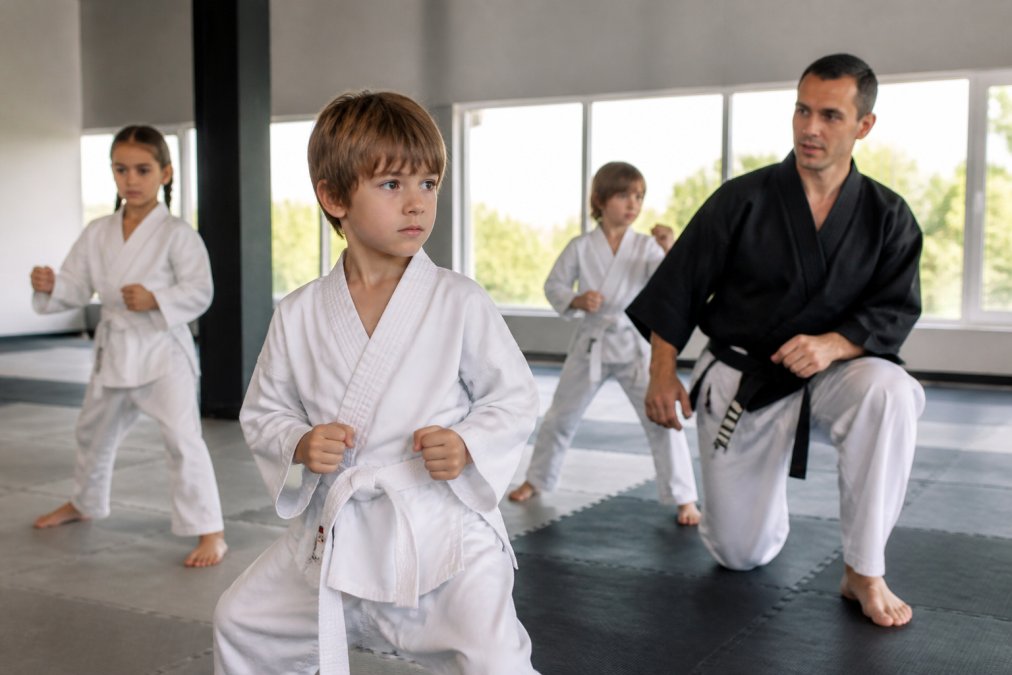
Kids ages 3 to 12 who need structure, movement, and encouragement to build focus that carries into the classroom.
When to Seek Professional Help for Focus Issues
Most focus struggles improve with routine, movement, and the right environment. But some signs need a professional’s eyes.
Talk to your pediatrician if your child:
- Falls behind in school despite support at home
- Can’t focus for even a few minutes on any task
- Shows extreme frustration, anxiety, or meltdowns
- Loses skills they once had
Frequently Asked Questions
Why is my child not focusing at school?
Focus problems usually trace back to a few common causes: inconsistent routines, too much screen time, poor sleep, or tasks that feel too long and overwhelming. Some children also have underlying attention or sensory processing needs that make sitting still harder. Start by tracking when focus breaks down most, then adjust sleep, screen limits, and task length before assuming something bigger is wrong.
How can I improve my child’s concentration and focus in school?
Build a predictable morning and homework routine, break tasks into 10-15 minute chunks with short brain breaks, and keep the study area free of screens and clutter. Physical activity before school or homework helps regulate attention. Activities to improve child concentration, such as martial arts, music, or structured sports, train sustained focus over time. Consistency matters more than intensity.
How does physical activity impact a child’s ability to focus?
Movement increases blood flow to the brain and helps regulate the same systems that control attention and impulse control. A short burst of activity before class or homework often improves concentration for the next 30-60 minutes. Structured activities like martial arts add another layer because they require following instructions, waiting turns, and repeating sequences, which builds focus duration directly.
When should I consult a professional about my child’s focus?
Talk to your pediatrician or a school psychologist if focus problems persist across home and school for six months or more, if grades drop noticeably, or if your child seems distressed or anxious about school. Signs that warrant a professional evaluation include trouble finishing age-appropriate tasks, frequent losing of items, and difficulty following multi-step instructions. Early evaluation opens more options for support.
